
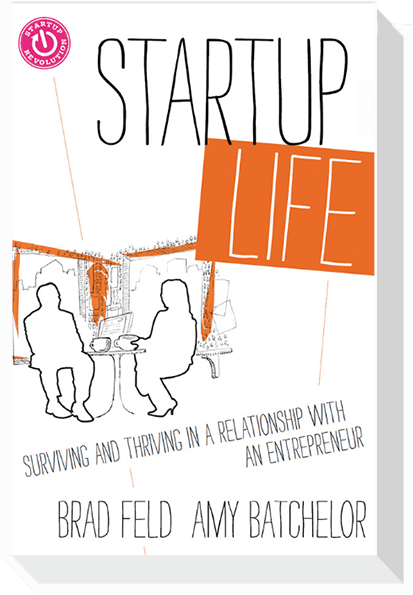
Startup Life Audible Edition
Exciting News! The Audible edition of Startup Life was just released.
You can sample the audio book below by hitting play, or you can buy the book by clicking on the “Buy” button.
Appreciation Dinners – Hacking Startup Life
Guest Post By Jason Hall – eCamaleao Marketing Ltd. – (Co-Founder)
Startups are tough. They’re demanding and can ruin relationships if you’re not careful. Back in 2011 my wife, Annelies, and I were building a startup together in Brazil. We had just raised a million dollars to scale up the customer acquisition for our daily deal aggregator. We were on top of our game and about to take over the world (or so we thought). Long hours at the office, days apart while on the road, and many hours in front of laptops at home were the norm. We poured everything we had into the startup. Meanwhile, our two children (now 5 and 3) were as demanding as ever and rightfully deserved more attention – and happier parents.
How to fit in everything? ”Quality time” with family started to slip to make way for getting just one more task done before starting anew in the morning. Forget about getting out to have a “date night”. And dinner discussions focused on resolving business problems; such conversations started to get more intense when we had differing opinions on certain topics. Things became even more amplified as the company started to run into finance problems…
Our relationship was in trouble and starting to show some serious cracks as the months rolled along. We co-habitated in the same space, took each other for granted, and sadly our relationship had lost its spark. Fights started from trivial issues and quickly escalated into days of anger and avoidance. It became clear that neither of us appreciated the other.
At some point we came across a blog post from Brad and Amy (which would be incorporated into Startup Life) describing Life Dinner. It was comforting to see that very accomplished couples had grappled with similar issues. And as we toasted in the New Year of 2012, Annelies and I both made a resolution to each other to adopt our own version, which we call Appreciation Dinner.
Appreciation Dinner works like this:
- Each month each of us will prepare a 3-course meal for the other
- One person is the cook while the other is appreciated
- Once the kids have gone to bed, the cook will serve the appreciated and will describe specific things they appreciate about the appreciated
- Rules: the cook prepares all the food, drinks and also does the dishes. The appreciated one is pampered. No cell phones, no email, no TV.
- (By the way, we both love to cook, so this also carves out some time to create and share interesting meals)
Proudly, we both stuck with our New Years resolution to each other during 2012 and keep up our Appreciation Dinners to this day. Starting out as very broad appreciations in the beginning (“I appreciate you for being a good mother”), the praise has turned into recognition of very specific events (“I appreciate your support last Thursday when I was stressed”). The accompanying conversation is very much along the theme of Life Dinner – we have a chance to reconnect in a safe environment and discuss broad life themes, major obstacles, fears, joys, planning for the future, etc.
Through the process we have turned around our relationship for the better and have never been more connected. We just celebrated our 10 year anniversary this January. And while the startup itself unfortunately didn’t meet our expectations, our relationship has emerged stronger than ever. We recently moved back to Colorado, and despite such a stressful life event as moving to another country, our Life Dinner hack gives us a great tool to stay connected and keep the daily stresses in context as we figure out our next professional moves.
Jason Hall is an expert in data driven, online marketing (PPC, SEO, affiliate, email, etc) & consumer website optimization. After working at various startups in Los Angeles, London and Porto Alegre, Brazil over the last 12 years, he has recently returned with his family to the Greater Denver area and is seeking his next challenge. He tweets irregularly at (https://twitter.com/hall_jason).
Noam Wasserman Reviews Startup Life.
Guest Post By Noam Wasserman – Noamwasserman.com – (Professor & Author )
Halfway through Startup Life, married couple Brad Feld and Amy Batchelor suggest that, “Being in a relationship with an entrepreneur is hard, possibly harder than being an entrepreneur” (p. 78). This hard-learned gem of wisdom is richly conveyed throughout their excellent read.
Through their own real-life examples, and those of others, Brad and Amy drive home the message that a founder’s spouse or life partner is the true cofounder, the one without whose support and contributions the startup could be dead or might have never been born to begin with. Startup Life is an invaluable resource not only for showing life partners their likely path ahead, but also for opening the eyes of the founders themselves to the stresses their partners are likely to experience.
I appreciate how the book tackles the full range of the entrepreneurial journey, beginning with the initial decision to leap (e.g., when motivated by “not wanting to risk a life in a cubicle”), and culminating with a successful exit. However, their clear-eyed presentation of these events highlights the unexpected challenges that can accompany even the biggest success. For instance, the authors poignantly describe the aftermath of Brad’s successful exit from one of his startups as “the entrepreneur’s equivalent of post-partum depression.” Far from the jubilation we would expect to see, Amy and Brad’s raw reflection offers a sobering, honest view of the dark underbelly of what many expect to be the glorious Promised Land. Along the way, Brad and Amy impart a wide variety of practical lessons and suggestions, such as keeping a weekly digital “Shabbat” in which they are offline each Saturday.
To ensure they have cast a wide net of experience, Brad and Amy pepper the book with anecdotes and insights from others in the entrepreneurial ecosystem. Almost all of the outside write-ups have at least one important insight, but a couple of them are particularly golden. For instance, Keith Smith, founder-CEO of BigDoor in Seattle, provides very personal reflections on how habits he developed within the startup harm his personal life. Reflecting on that broader pattern, he says: “…the fact [is] that many of the skills that entrepreneurs develop to help us survive and ultimately succeed in a startup are in direct opposition to the skills we need to build a long, happy, and stable relationship. Embrace risk. Fail fast. Move even faster. Solve problems quickly, and without waiting for every fact to reveal itself. Multitask well. Shape the world around you to match your vision. … [As a result] I’ve got screwed-up priorities, a well-developed set of exactly the wrong skills, and I come off as being emotionally unavailable.”
Another golden write-up delves into the experiences of two spouses cofounding together – “couplepreneurs,” if you will. (My data has shown that founding teams comprised of friends and/or family tend to be less stable than other teams, emphasizing how founding with those types of people is “playing with fire.” Such teams should devote a lot of attention to developing “firewalls” to protect themselves.) Krista Marks and Brent Milne describe their own firewalls, such as always using each other’s given names at work and nicknames at home, and going out of their way to prove to the rest of their teams that they do not discuss sensitive work issues at home.
More generally, succeeding at founding a startup while founding a family requires cultivating an awareness that startup rhythms are rarely in sync with the rhythms of personal life, and that there are often strong disconnects between the entrepreneur’s psyche and the spouse’s. Two of those disconnects are highlighted in the book by spouse Alexandra Antonioli: divergent perspectives on money (“A person who has always worked a salaried position from 9 to 5 arguably does not view money in the same way as the entrepreneur”) and time (“entrepreneurs like to overbook. … They will be late.”). She calls the latter “the Entrepreneurial Time Zone.”
In addition to highlighting the potential disconnects between the personal and the professional, Brad and Amy also highlight ways in which startup best practices should be imported into a founder’s personal life. For instance, the entrepreneur’s intense focus on the startup’s cash position: “Make sure as a couple you know where you stand, how much money you actually have, what your monthly burn rate is, and how long you can go before you are out of money.” Another bit of overlap with founding teams: “a couple that ‘never fights,’ it’s almost always a sign of avoiding talking about troubled topics and not the result of complete accordance and unity with each other.”
Along the entrepreneurial journey, we get to know a variety of fun tidbits about Brad and Amy. For instance, Brad’s ringtones include – perhaps a bit too tellingly! – “Money” for his VC partners and “Comfortably Numb” for CEOs. Brad’s “14-year-old inner self” has a strong aversion to babies. Even though Brad stresses the importance of having regular Life Dinners with Amy, they’ve had to develop “our fail 12.5 percent of the time rule”: that Amy allows Brad to miss it unexpectedly one out of eight times. And even though Brad had significant assets to protect when they got married, they don’t have a formal prenup. Instead, if the relationship fails, Brad says that Amy gets everything and Brad will start over from scratch.
We’re left with a richer picture of the authors, but also a richer picture of the ways in which the founding journey will challenge the most cherished of our relationships, insights that will hopefully enable us to preserve the professional without imperiling the personal.
This is a re-post from Noam’s blog at noamwasserman.com
Noam Wasserman is a professor at Harvard Business School. For more than a decade, his research has focused on founders’ early decisions that can make or break the startup and its team. At HBS, he developed and teaches an MBA elective, “Founders’ Dilemmas,” for which he was awarded the HBS Faculty Teaching Award and the Academy of Management’s 2010 Innovation in Pedagogy Award. In 2011, the course was also named one of the top entrepreneurship courses in the country by Inc. magazine.
Part 5 of Enjoying the Ride: Celebrate the Small Things
Guest Post By Marc Barros - One Entrepreneur’s Perspective - (Blogger)
Celebrating the Small Things is the fifth and final post in a five part series called ”Enjoying the Ride.” Comparing a start-up to surfing, this is a simple guide to turn your grueling start-up battle into a more soul fulfilling experience by helping you battle the sets and pick the right waves so you can enjoy the ride.
“When you overcome the fear and all the elements that are working against you and ride one of those waves, there is a feeling of gratification and accomplishment that is beyond words.” ~ Greg Long (big wave surfer)
Beating your numbers feels good. It’s such a binary understanding that everyone, from employee to investor, can grasp. And your success against your own predictions is the industry’s way of saying “this company is killing it” or worse, “they are struggling.”
But should it be?
I spent a lot of time at Contour feeling the joy of beating, and the pain of missing, our own numbers. People got worked up at the end of every quarter based on our performance, when the only number that really mattered was how much cash was in the bank. Having to explain lower than expected numbers is never a fun conversation, but for the rest of the organization it meant they had nothing to celebrate. All the work they did went for nothing because outside of the sales team they had minimal impact on the numbers. Most people don’t have a budget and they don’t sell, which means they have an indirect impact on the financial results.
The elation or disappointment around the quarterly numbers was masking the real question.
Are we getting better?
Building a great company or being an amazing surfer isn’t like playing a team sport. There is no trophy you walk away with or a championship you can try for again if you lose. There isn’t a fixed time you play or rules that define how the game is played. It’s an ever changing quest that has no timeline and no clear definition of victory. And the only thing that tells you if you are improving is how you feel.
When you talk to people who have surfed their whole lives they don’t talk about the wins they had or the expectations they beat. They describe beautiful pictures about the journey, about the moments they remember with their friends, about the conditions on a particular day, about the power of the wave under their board, about the near misses, or about how surfing fills their soul. Getting better is a life quest, while improving is a confidence you gain wave by wave, set by set, session by session. It can’t be measured, but it can be felt.
Now that my time is over with Contour I don’t always remember the quarterly numbers or how we did against our own expectations. I don’t remember what our annual objectives were or what we talked about at every board meeting. What I do remember are the too few times we celebrated the journey. I remember the happy hours, the company parties, the lunches to welcome a new employee. I remember our product launches and the excitement when great reviews got emailed around the office. I remember the company pride people shared attending events and trade shows. A list of things I remember that rarely had anything to do with our numbers.
Yes, numbers are important and you will never get away from quarterly projections or investor expectations. As long as you are building a growth company your success will be measured by how “up and to the right” you are. Beyond the numbers proving frequent employee reviews, clear quarterly objectives, a consistent vision, and values, they help in keeping your whole team on the same page.
But even if you do all of this, which is expected, people will still wonder if you’re getting better. Seeing numbers on a chart or passing out a few beers at a company meeting isn’t memorable. It’s what everyone does.
What’s memorable are the things you celebrate. It’s the small ways you make people feel appreciated or the small ways you help people feel the wave of momentum the company is creating. Helping people feel the journey is a critical part of your job and something most entrepreneurs overlook. Because most of us are intrinsically motivated, celebrating before our life’s work is done doesn’t make much sense, something I often struggled with.
But to everyone else it matters. And when your time is done and the company is gone, it’s one of the few things you will take with you.
Celebrate the People
We all need recognition. This may be hard for entrepreneurs to believe and it may even drive you nuts that people need positive confirmation of the work they are doing, but get over it. If you want to lead people you have to keep them inspired for a very long time, doing their best work.
Abraham Maslow, a psychologist who created Maslow’s Hierarchy of Needs, explains why esteem, to be valued and respected, is one of our basic human needs. What Maslow goes on to say is that there are two types of esteem. The first is the desire for personal achievement, adequacy, mastery, and competence, which gives us self confidence and ultimately personal freedom. The second is the desire for reputation, respect from other people, which includes status, dominance, recognition, attention, importance, and appreciation.
Knowing people need some form of recognition, doesn’t mean you have to run around congratulating everyone, nor does it mean you have to call everyone out publicly at a company meeting. Not everyone wants public recognition for their work and it’s not your job to do all the congratulating. Instead your job is to create a culture that helps people appreciate one another.
I have found two areas to focus on. The first is creating an environment where people can do their best work. One of the reasons people join a start-up is to have an impact and they can’t do that if they are unable to make decisions on their own. Too often at Contour plans were passed down to people instead of being built with the team from the ground up. By the time people got their assignment it was just that, an assignment. The best example I have found is Valve, a software company based here in Bellevue, Washington. Their employee handbook is a must read and from it you can see that their entire premise is to create a place where people can do their best work.
The second area is to appreciate people in small ways. From the time they join the company to the time they leave, you want to celebrate their accomplishments along the way. Ideas on how to do this:
- Make their first day amazing. Before they show up have a computer ready, desk arranged, people available to help them, and everyone in the company knowing what their role is. If someone’s first day is disorganized it makes them feel undervalued from the second they arrive.
- Anniversaries are like birthdays, don’t miss them. People spending a year or multiple years at the company is a big deal.
- Give them the tools they need. It doesn’t mean everyone gets Mac screens, but before you hire people make sure you can afford the tools they need, otherwise they become frustrated they can’t do their job and instead of concentrating on the work they are wasting time with equipment that doesn’t work.
- Constantly give feedback! It’s easy to get lazy and put off annual reviews, but don’t. And don’t put off telling people you thought they did a good job or you thought their work was great. A simple “thank you” or “congratulations” in person (not on email) goes a long way.
- Buy people food. Eating is a great way to put down the laptop and say thank you.
Keep it fresh. However you celebrate people, be creative about it and don’t make it a pattern or people will assume you are just doing it to check off a box.
Celebrate the Company
You probably aren’t building Rome, but you are building a company and building a great one takes an army of people. I’m not just talking about the employees. It takes investors, customers, lawyers, partners, family members, vendors, etc. to make the journey a success. The reality is that most of the people involved in your company won’t retire in luxury from their involvement. The odds of success are so minute that most of them will walk away with nothing more than the memories of the journey.
As the leader, it’s your job to make everyone feel involved. No different than celebrating the people, you have to come up with ways for people to follow the journey, brag about your success, and create a deeper relationship with the company.
But what items do you celebrate?
The first way is to create public events everyone can attend. I still have goose bumps from standing on stage at my firstZumiez 100K. Despite being a public company Zumiez, an action sports retailer, puts on an annual two-day event that celebrates everyone involved with the brand. The founder and CEO get on stage to talk about the company, the successes for the year, and what is in store for next year. All of the Zumiez employees are dressed in ridiculously awesome costumes and the top 10 sales people are rewarded with public recognition and massive gifts. The founder of every brand is invited to go on stage in front of thousands of people to personally say thank you. Athletes are invited on stage to give their own shout-out and engage with the employees. And everyone mingles together in a massive after-party.
Granted, a start-up can’t afford this. But then again, Zumiez has been doing this since they started some 35 years ago and I’m sure the initial event was not nearly the spectacle it is now. They have alway believed that everyone should be involved in the success of the company.
The second way is to celebrate small wins on a daily basis that go beyond your numbers. Items that are consistent with the company values is a great way to constantly remind people what is important. Just remember to be selective about which events are worth sharing outside of the company or you risk inundating people with victories that are hard to grasp if they aren’t living the battle with you everyday. Some ideas include:
- Document the journey. You are creating history and you can’t remember it without pictures, videos, and documents of what happened. It’s great material to pass on to people who weren’t there.
- Decorate the office with accomplishments. Putting up press clippings or customer quotes is a great way to remind people of the company success.
- Collect and pass around positive reviews. Third party acknowledgements are great bragging rights, especially from end customers and editors.
- Customer wins. Getting new customers is motivating, but just remember to let people know if you lose a customer too. No one likes to be bragging about your awesome new customer to find out down the road from someone else they are no longer a customer.
- Completing projects. Yes, product announcements are the easiest, but even celebrating the completion of small projects is important.
- Sharing prototypes. People love to see the new ideas being worked on so sharing visual work as it’s being completed is incredibly motivating.
- Successful events are filled with photos and stories people who didn’t attend would love to know about.
- Marketing campaigns, especially successful ones that move the needle are visual and help people grasp the message we are sharing with the world.
- Happy hour (yes, cliche) is still a great way for people to connect and share the projects they are working on.
It means a whole lot more when the whole company takes time out of their busy day to enjoy the milestones, especially if the celebrations are during working hours and outside of the office. And don’t forget to invite significant others, they are quietly the most important aspect of employee success.
Conclusion
Building greatness is hard and there may be a lot of days when you feel like you are going backwards instead of forwards. But that is part of the journey and helping people appreciate the ride is one of your most important jobs.
Yes, company updates give people the information they need, but feeling the momentum is even more important. Especially in the volatile world of startups, people need to hear, see, and touch success over and over and over again. It creates a wave of momentum that can overcome the setbacks you face along the way.
Get out from behind your laptop and help people enjoy the ride. Because when it’s over, your memories will be all you have to look back on.
My Purpose
I am an entrepreneur. A creator. A builder. I want to build companies that make the world a better place, one product at a time. I have come to believe that if you let life unfold itself, you will experience it like never before.
Contour
My first start-up and therefore my first love. I co-founded Contour in a garage almost ten years ago and was fortunate enough to have lead the company from inception to a multi-million dollar business with hundreds of thousands of customers around the world. I am most proud of the award winning products we create, which are thoughtfully designed and incredibly easy to use. Contour.com
Contact Me
marc.barros@gmail.com
@marcbarros
Related articles
Part 4 Of Enjoying The Ride: It’s Not All About You
Guest Post By Marc Barros - One Entrepreneur’s Perspective - (Blogger)
“…You go through a lot. Physically, mentally, and so the friendships that are made in the big wave lineups run so deep…we love one another with the most respect that you could. ” ~ Greg Long (big wave surfer)
Relationships. The most volatile, unpredictable, but important part of the company you build. Unless you want to build a one-man show and sit in a closet, people will become incredibly important to your success.
And I’m not just talking about employees, I’m talking about all the relationships around your business. The army of people you need to influence to believe in your vision, your products, and your leadership. I’m talking about editors, investors, employees, vendors, suppliers, retailers, family members, lawyers, strategic partners, athletes, customers and anyone who takes an interest in what you are building. All of them need to believe for you to create a successful company.
When you start, it’s easy to ask for help. If you are persuasive enough you may even find it easy to convince people to join, invest, purchase, etc. Your decision to constantly put the business in front of these relationships will always feel like the right thing to do. And for a long time people will put up with it, until they won’t. Once they believe your concern for them is shallow and that the only time you call is when you need something, their desire to help will be replaced with frustration, disenchantment, and even anger. People can sense if you aren’t genuine and your actions always speak louder than your words.
Changing this dynamic is hard, especially when it feels like you are short on time and energy to give yourself to everyone. Putting people first requires an incredible amount of vulnerability and a level of commitment that is more tiring than keeping everything surface deep. But what I can promise you is when you start putting people first the relationships get better. You begin to appreciate what you have and enjoy everyone for more than what they can do for the company.
Unintentionally, I know I burned a lot of relationships along the way. I was constantly battling with how much to give as I pushed forward with business first, people second. I figured that people would understand when I did what was best for the business in place of what was best for them. It is true that you will have to make very hard decisions about people, decisions that haunt your dreams and make your stomach turn inside out. And it’s also true that no matter how much you commit to them people may hate you when you let them go. Relationships you thought would last a lifetime are ended in seconds, and that hurts.
At the end of the day, when the dust settles and your time with your company is over, you will realize that all you have are these relationships. How you treated them is all that they will remember. And the memories you shared is all that you end up taking with you.
Appreciating people is hard, but it’s worth it. It makes the ride so much better.
The following is a short guide to help you appreciate the relationships around you so you can better enjoy the ride.
Value People’s Time
You are running a business. A business that does need to generate revenue, profits, or investment capital to stay alive. That oftentimes needs you to make very hard decisions that you hope will keep the company alive to fight another day. Casualties along the way will happen, but it doesn’t mean people have to think you don’t value them.
One of the hardest lessons I learned was to value people’s time. I was always over-scheduling myself and justifying why being a few minutes late was okay, but don’t do it. There’s nothing more frustrating than starting a meeting late or waiting for someone to arrive when they asked for your time. Be early and prepared for the meeting and do the other person a favor by requesting the meeting days in advance along with a short agenda of what you want to talk about. Sure, some meetings need to happen the same day, but giving people a heads-up goes a long way. A surprise attack meeting from the CEO never goes well.
Once you have people’s attention don’t waste it. Be direct in your communication. Ambiguous, passive-aggressive communication is awful, especially in tough conversations that no one wants to be having. A direct approach may initially hurt people’s feelings, but they will appreciate your honesty. Not knowing where you stand or not knowing where they stand makes the relationships awkward, at best. Even if you need more time to think about a subject, tell them that. You aren’t expected to have every answer at your fingertips. Thinking about things is perfectly acceptable and a much more thoughtful way to go. Just don’t forget to follow back up and let people know where you stand.
If people provide introductions, treat them with utmost importance. People are always afraid to introduce you to people they know because how you treat their friends will be a direct reflection on them. Being polite, on time, and direct with what you want to talk about, will go a long ways towards people sharing relationships that may help you. If people offer an introduction don’t be afraid to say no or say why a time in the future would be better. It’s better to know the introduction would not be helpful than to make it and have it linger in email eternity.
Lastly, be sure to say thank you. That can range from a handwritten card, to an email, to looking directly in their eyes and saying thank you. The more thoughtful your follow up is about what you are thankful for only helps in keeping friends who will continue to support you. People recognize that when you start, you can’t pay with money, so do everything you can to repay them with gratitude.
Be a Great Listener
It means you have to be present. Having your computer open, auto-updates buzzing in your pocket, or half thinking about something else means you aren’t giving people the attention they deserve. If you don’t have time for the discussion then don’t start it.
Getting good at listening takes real effort. Yes it’s hard to turn off all the extra thoughts floating around in your head, but the more you practice turning them off to really be present the better you will get at it. To be good at listening it starts with eye contact. People can tell when your mind is bouncing all over the place because your eyes will be doing the same thing. A friend once taught me the best way to make eye contact is to focus on one of the person’s eyes. It sounds creepy, but it will help your mind settle down and focus.
Then to actively listen you must be engaged with the speaker. It doesn’t mean you have to speak, but show enthusiasm. Show it in your face, your energy, and your body language. When it is time to respond, return the same energy they brought. Build up on their idea instead of tearing it apart.
Even if you are three steps ahead of the person presenting, it doesn’t matter. Telling them the answer or taking the pen out of their hand leaves a bad taste in people’s mouths. I used to do this all the time and the only person who felt good about it in the room was me. Sadly, a pen in my hand leading the discussion on the whiteboard was my way of listening.
In my recent time off I have been taking an improv comedy class. Partly to put myself in the most uncomfortable situations possible, but partly because the laws of improv are the core to great team building. If you ever watch great improv the acting team builds upon itself. The first rule of improv, “yes…and”, dominates the conversation as you take someone’s idea and add to it. You never cut it down or tear it apart. The conversation may flow in a different direction than you first thought, but as trust builds with the team you can take the initial idea and run with it. Something I look forward to being better at with the next company I build.
Being a bad listener is just being lazy.
Learn to Empathize
I’m sure we have all read the stories about Steve Jobs and his lack of concern for everyone else. If your creative genius is anything close to his then okay, maybe you can get away with it. But for the rest of us, learning to understand people from their perspective is critical to improving the relationships around us.
Empathy is the basis of great user research as you try hard to understand the problem from the user’s perspective. You are constantly putting yourself in the customer’s shoes and trying to understand what they are trying to do that they can’t do.
What makes empathizing so hard is it goes against our natural intuition, which is to convince people our point of view is right. Especially as entrepreneurs we spend so many hours defending, that we often fail at accepting another perspective and because we are so attached to our own point of view we often confuse it with our own identity. And so sometimes empathy can be very difficult because we get nervous that if we put ourselves in someone else’s shoes to see their (different) point of view we might lose part of our identity, we might lose part of our “Self.”
There are two scenarios I experienced a lot.
The first is something goes wrong. As a leader you will receive information that no one else will have. Often incredibly conflicting, it is easy to make assumptions based on all the opinions and lack of facts around you. But I challenge you to start with the people and not just ask them what happened, but understand it from their perspective. Put yourself in their shoes to understand how they approached the problem, the resources they used, how they are feeling about it, and really why the result is different than you expected. It may take several discussions to actually get down to the root cause, but it’s a much better approach than making an assumption about why.
The second is predicting what people will need. This is much harder and can take years of practice. The better you understand people around you, what motivates them, make them happy, or what they need, the better you can predict this. Providing solutions before they need them is like creating great products people didn’t even know they needed until they tried it. I have a very long way to go to get good at this.
Surfers do this in a very basic way. They look out for each other in the water. Like a brotherhood, they never give up helping a surfer in trouble, no matter how long it takes. Most of them have been there before and instantly they can understand what it’s like. An unspoken language many of us never experience in the business world.
Create Depth to the Relationship
As the CEO, your job isn’t to be friends with everyone. Often figuring out how far to go with each relationship is a constant battle. Yes, you want to build camaraderie with your team, investors, partners, etc. but you do need to make it clear where the line is.
With that in mind there is a lot more to life than just work. Often I was so focused on the company, it was the only thing I would think about and most of the time the only thing I would talk about. I loved talking to everyone about business and rarely drifted off to new subjects. It’s okay if you aren’t caught up on the latest pop culture, but you can talk to people about life outside of the company.
Getting to know what people are passionate about helps you be a better leader. Learning what motivates people, where they like to travel, what makes them happy, what they like to do when they aren’t slaving away to make the company stronger, etc. goes back to empathizing and helping you understand where people are coming from. You won’t get to know people by constantly being in meetings or by only connecting with them at happy hour. Learning about people can happen in small increments during the day, at social events, or even at lunch.
Lastly, please don’t ask about their life to just ask. If you don’t care or you don’t intend to care then just talk about business. People can tell when you don’t care or even worse when you don’t remember personal things they shared with you.
Conclusion
Building a great company is hard. Building it alone is depressing. Learning to put other people first is something I constantly battle with, but I believe it will not only make me a better leader, but more importantly it will make the journey so much more enjoyable. No different than the level of commitment surfers have in the water to protect each other, putting other people first will create relationships that last long beyond your company days.
Image Credit: Rickbucich via Creative Commons
My Purpose
I am an entrepreneur. A creator. A builder. I want to build companies that make the world a better place, one product at a time. I have come to believe that if you let life unfold itself, you will experience it like never before.
Contour
My first start-up and therefore my first love. I co-founded Contour in a garage almost ten years ago and was fortunate enough to have lead the company from inception to a multi-million dollar business with hundreds of thousands of customers around the world. I am most proud of the award winning products we create, which are thoughtfully designed and incredibly easy to use. Contour.com
Contact Me
marc.barros@gmail.com
@marcbarros
Related articles
Part III of Enjoying The Ride:Doing Less is Harder than Doing More
Guest Post By Marc Barros - One Entrepreneur’s Perspective - (Blogger)
Doing Less is the third post in a five part series called “Enjoying the Ride.” Comparing a start-up to surfing, this is a simple guide to turn your grueling start-up battle into a more soul fulfilling experience by helping you battle the sets and pick the right waves so you can enjoy the ride.
Doing Less.
People talk about it, but how do you actually do it? I mean, how are you expected to do less when the workload doesn’t stop and your company is David taking on Goliath?
It’s incredibly hard, especially when speed is considered so important in taking the hill and challenging your competition.
At Contour I sucked at this for a very long time because as the CEO, doing less is largely determined by the CEO, and my natural tendency to outwork everyone meant I valued quantity over quality. My unrelenting drive demonstrated to everyone that I believed time was free and therefore unlimited. Even if people complained they couldn’t get everything done I figured they would do what I did, work more hours.
I fell into this same trap when I started surfing. As soon as I got past the break I was quick to chase the first wave that came, regardless of my probability of catching it. I figured the more waves I went after the better my chances of catching one. Instead of waiting to pick the right wave for me, I went after everything as if I could do it forever. But quickly I realized I spent a bunch of valuable energy paddling only to miss the wave and get pounded by the whitewater of the follow on one. The number of waves I caught decreased and instead of having fun I realized how much work I was doing. Being patient to wait for the right wave became an exhausting lesson to learn on the board.
Over the years at Contour it became more and more evident that in order to do better work, everyone had to do less, myself included. People were tired of producing work they knew could be better, which only amplified with more people, more meetings, and growing to-do lists. Our culture of do first, think second made it hard for everyone to figure out what was and was not important.
It took me a long time to understand this, but doing less doesn’t mean you will be less successful, instead I think you can be more successful because you won’t waste a bunch of money redoing the work, you won’t have frustrated employees, and you won’t create a culture of “it’s good enough.” But in order to actually do less you have to be more patient and much more tenacious about prioritizing your time. Instead of thinking that time is free, treat it as the most valuable and expensive resource you have. The most expensive cost in a business is the people, so don’t waste their time.
The following is a short guide to help you prioritize your time so you can do less, but better work. Doing great work is a big part of enjoying the ride.
How Much Time Do You Really Have
If you step back and look at your day, it will shock you how few hours you really have to do quality work. Assuming you want to deliver your best work over multiple years, let’s look at how many hours you really have in a day:
- You sleep ~ 7 hours
- Getting ready ~ .5 hours
- You eat three meals ~ 1.5 hours
- You commute to and from work ~ 1 hour
- You exercise on a regular basis ~ 1 hour
- You have family or personal time ~ 2 hours
- You answer inbound requests (like email) ~ 3 hours
Throw on top of that a crazy travel schedule, kids, unnecessary meetings, and unplanned opportunities and you really have less than 8 hours of your day to really think. Which to most people would seem like a lot of time, but when you are running a company there is so much demand for your time that you end up dividing your eight hours over a variety of random subjects across multiple people. And when you run out of time you start justifying why cutting down on family time, sleep, working out, personal time, and meals is more important than taking care of yourself.
As a founder you spend your early years running around making everything happen, but as your idea grows into a real company you are supposed to transition from doing less to thinking more. A transition that actually requires more mental capacity than when you ran around making sure remedial tasks got done.
In order to do great work you first need to have energy and enough time to really dive into it.
Group Your Schedule
Everyone organizes their day in different ways, but in order to do better work the first step is better grouping of your schedule. Jumping from subject to subject is hard, especially if you don’t leave yourself enough time to mentally transition.
Personally, I found the thinking in 7 Habits of Highly Effective People to be a great way to organize my week. I would sit down every Sunday and think about what I needed to accomplish for the week. Then I would organize my days so I had a few hours before lunch and a few hours after lunch to accomplish these tasks. I would then do my best to keep team meetings and appointments to the beginning or end of the day so I had the rest of the time to myself. If I needed to have back-to-back meetings with different subjects, I found that using a 10-minute break to go outside to get some fresh air helped me clear my mind so I was ready to jump into the next discussion.
In a recent New York Times article, Tony Schwartz talked about energy renewal during the day. The research he cited supports a cycle of 90-minute work sessions, followed by rest cycles during the day. “Human beings aren’t designed to expend energy continuously. Rather, we’re meant to pulse between spending and recovering energy….Working in 90-minute intervals turns out to be a prescription for maximizing productivity. ”
Even when I successfully blocked out my day, I found the hardest part was turning off email and social feeds, especially when my phone has auto-updates turned on. My most productive days happened when I limited these distractions to three times per day, when I had the proper time to provide thoughtful answers.
Of course, when I got tired I reverted to my old ways of filling my schedule with random meetings and discussions. I had spent so many years covering way too many subjects that deep down I probably missed the breadth, so when I couldn’t add any more value thinking, I resorted to doing. A habit I should have replaced with taking a break, instead I just kept plowing through my day.
The framework I used for my weekly schedule.
Prioritize Your Workflow
How often have you sat down and started working by opening your email?
Prioritizing your work based on your inbox is a quick way to become overwhelmed and before you know it you have wasted the valuable thinking time you have. I always found email to be a horrible form of communication, especially when people value the quantity of emails they send versus the quality of them. I used to send way too many emails, especially when I was tired and instead of using the limited creative energy I had, I wasted it on half thought-out messages.
If you prioritize your work from the most important to least it will help you and your team realize the unimportant stuff that isn’t getting done. Part of being able to enjoy the work is not feeling overwhelmed by a bunch of small tasks that really don’t matter in the end. So if you never finish your list it’s a great way to go back and tell your team what isn’t getting done and why.
I always found the best people were great at estimating how long the work would take and communicating why something wasn’t getting done.
Kill Random Meetings
Learning to say to no random meetings is something you should start very early in your culture. Once it becomes a habit, the habit only gets worse with more employees and shared calendars. You don’t want to create a culture of arguing about why you personally don’t have to attend the meeting, but early on you want to agree on what types of discussions are worth scheduling people’s time for.
Jason Fried with 37 Signals is a huge fan of this and he does a great job in “Getting Real“, explaining why meetings are toxic and why people need alone time to think. If not, your employees will start working from home so they can get real work done and avoid all the meetings.
I found there were two types of meetings worth having.
The first are update meetings, which are best served by short scrum like meetings that last a few minutes and update everyone on what is going on. This can be much harder when you have people calling in from different time zones, but updates should be short and sweet. A monthly update will probably be a bit longer, but regardless they should be concise and give people the information they need.
The second are group discussions, and they should really be reserved for creative sessions that require multiple types of inputs. These are not update meetings, but instead should be reserved for the few times you need to get a group of people together to discuss how to solve a problem or for creative brainstorming. Otherwise you are wasting a lot of money when you have multiple employees sitting in a room adding little value. And people need to get over feeling hurt if they are left out of a discussion. Creating a short agenda and being selective about who should be in the discussion and why is important.
Make it Clear When You Are Available
Early on I thought part of my role was being available to everyone, all of the time. An open door policy is great for people thinking you are accessible, but terrible for getting real work done and forcing people to think before they bring you questions. Most of the time I would say “Sure, I’m available” and then after the discussion it would take me several minutes to restart from where I left off. Even worse, I was half present, which probably made the discussion a waste of time for both of us.
An important part of your job is letting people know when you are and aren’t available. People will have questions and random requests, but it’s important to let them know when is a good time to bring you these requests and when it isn’t. Signals that help people know this can be headphones, a closed door, changing your Skype status to unavailable, and turning off your phone.
This goes for everyone in the organization, but if you do get interrupted, politely let people know you are busy and when you are free to connect.
Enjoy the Work
Building a company is an incredibly unique opportunity. It is something you will only do a handful of times in your life, so don’t take it for granted.
Discovering a real problem in the world that you happen to be passionate about is rare. Turning that opportunity into a real company is then no small matter, so when you are battling the waves on a daily basis don’t forget to enjoy it. Being able to dive deep into thinking about how to make your company, product, experience, culture, etc. better is a lot of fun.
Because when it’s over you’ll wish you had taken the time to enjoy every moment of it.
Image Credit: SURF&ROCK via Creative Commons
My Purpose
I am an entrepreneur. A creator. A builder. I want to build companies that make the world a better place, one product at a time. I have come to believe that if you let life unfold itself, you will experience it like never before.
Contour
My first start-up and therefore my first love. I co-founded Contour in a garage almost ten years ago and was fortunate enough to have lead the company from inception to a multi-million dollar business with hundreds of thousands of customers around the world. I am most proud of the award winning products we create, which are thoughtfully designed and incredibly easy to use. Contour.com
Contact Me
marc.barros@gmail.com
@marcbarros
Part II of Enjoying the Ride: Staying Mentally Fresh
Guest Post By Marc Barros - One Entrepreneur’s Perspective - (Blogger)
Staying Mentally Fresh is the second post in a five part series called “Enjoying the Ride.” Comparing a start-up to surfing, this is a simple guide to turn your grueling start-up battle into a more soul fulfilling experience by helping you battle the sets and pick the right waves so you can enjoy the ride.
Being an entrepreneur is a choice. Going to work everyday is a conscious decision. No different than choosing to surf the world’s largest waves you are choosing to navigate a group of people through extreme conditions with the hope of making the world a better place.
So if I’m choosing to do this, why am I so mentally exhausted, stressed out all the time, and deeply afraid that I’ll let everyone down?
Because learning to manage your own psychology is the hardest part of running a company. Constantly overcoming the fear of failure is incredibly hard, especially with mounting expectations from your employees, investors, and customers. The more you succeed, the harder your job becomes. Rand Fishkin touched on this recently in a blog post about the expectation to give 100% of yourself and why it is so hard to run a growing business.
No one wants to fail and if you aren’t mentally prepared for the battle ahead it can crush you into the ground like a gigantic wave.
In running Contour, the only way I survived was by brute force. I didn’t give up. But it doesn’t mean I didn’t almost drive myself or the company off the cliff on several occasions. Not having preconceived notions became my saving grace and finding an outlet other than Contour was the only thing that kept me sane.
Being on the sideline for the first time in a decade is allowing me the opportunity to think about the mental transitions I was going through. They were gigantic, especially for a twenty-something-year-old trying to figure out life while pretending he had everything figured out as a leader. It is true that you will experience things you can’t predict, but I have come to believe that you can prepare yourself mentally to handle the ups and downs so you can actually enjoy the ride.
The following is a guide of how you can be better prepared on a daily basis.
Admit You Have No Idea
“There are a lot of variables of the ocean you can’t control.” – Greg Long
The very nature of a start-up is that it’s built on a series of assumptions and predictions about the future. Assumptions that can be so interconnected that if one thing changes, it has the potential to disrupt everything you have built. This can turn team momentum into disappointment, looking as if you would lie to them about the predictions of the future.
The minute you admit “you have no idea what is going to happen,” is the moment a huge weight gets lifted off of your shoulders. Instead of feeling you have to have all the answers you can galvanize a whole organization into helping you think about solving the problems the company faces. Instead of becoming plans of stone, they become plans that adjust to the actual conditions at hand. And instead of everyone feeling like you let them down, they can pivot to think about how to solve the new problems.
No doubt “change” in a start-up adds an incredible amount of stress on the organization and the individuals involved. But no different than surfing, the only thing you can count on is that the ocean constantly changes. Admitting you have no idea which way it will change, not only lifts the collective stress off the organizations, but shifts everyone’s mentality to helping understand the changing tides.
Turn Off the Distractions
You know that anxious feeling you get when you can’t stop touching your phone in anticipation of the next tweet, email, text, Skype, Facebook, or phone call? The small rush of excitement you get in anticipation of figuring out who reached out and why?
It’s called not being present.
And when you aren’t, you miss the ride, your work suffers, and people don’t want to be around you. Your significant other probably calls you out the most, but being present is one of your most important jobs. Yes, communicating is an important part of your job and there are times when checking email, twitter, etc are part of your day. BUT, you already have an incredible amount of inputs coming in on a minute-by-minute basis so turning off your twitter feed, closing your email, and putting your phone on silent will enable you to be present. If you have issues you can’t stop thinking about then write them down and leave them there until you have time to come back and deal with them.
Especially two hours before going to bed, turning off all the electronic distractions in your day will help you sleep so you can be fresh to tackle the day ahead.
Find Someone to Talk to
Figuring out who you can and can’t talk to is a painful process to go through. Even more painful is to learn that if you talk too much people start losing confidence in your ability to lead. Especially if you don’t have any other outlet than the people involved with your business.
It was 2008. My mom had just passed away from 15 years of fighting breast cancer, I recently broke up with my girlfriend of three years, and the economy was tanking. I was a train wreck ready to hit the wall at a hundred miles per hour. I had no idea I even needed help and instead I bottled everything up and pushed the train even faster. Putting in more hours and taking on more responsibility than ever. And then I got lucky. Into my life walked someone who taught me how to open up. She became someone I could talk to about everything I was going through. Someone who didn’t judge me or try to answer my questions. She just listened.
Every entrepreneur needs someone they can talk to. It doesn’t have to be a significant other or even a friend. It can be a professional, but most importantly find someone you trust, who listens well, and understands how to deal with complex relationships. Brad Feld talks openly about professional help for entrepreneurs in his recent book, “Startup Life – Surviving and Thriving in a Relationship with an Entrepreneur.” Brad has worked with a lot of start-ups and is a strong believer that entrepreneurs need someone to talk to, especially a professional who is focused 100% on helping them talk through the challenges they face both with the company and their personal life.
Bottling everything up only compounds the pressure you are under.
There Is Life Outside of Work
Running a company is incredibly lonely, but it doesn’t mean the rest of your life has to be. My family would find it ironic I’m not admitting this, but there are people who care about your well being outside of work. People who aren’t looking for you to constantly be on or lead them. People who just like being around you and care a lot about you.
Spend time with your friends, family, and significant others. You let them in your life at one point because you enjoy them, so go enjoy them.
When we start a company one of the things we believe is it will give us an incredible amount of flexibility to work where we want, when we want. Instead we replace that dream with working everywhere, all the time. Part of unlocking your own creative energy is enjoying life’s pleasures. It is okay to go ride on a powder day. It is okay to go surfing in the afternoon. It is okay to take Friday off to hang out with your family. Taking time off to make life less predictable is one of the best ways I have found to stay fresh.
I wish I hadn’t spent my twenties behind a laptop.
P.S. There is a great interview of Greg Long, infamous Big Wave Surfer, talking about fear and how he overcomes it to surf the largest waves in the world. It is 20 minutes, but it’s not only inspiring, but very related to the challenges of building a company. (http://vimeo.com/channels/surfprevention/51117940)
Image Credit: Nathan Gibbs via Creative Commons
My Purpose
I am an entrepreneur. A creator. A builder. I want to build companies that make the world a better place, one product at a time. I have come to believe that if you let life unfold itself, you will experience it like never before.
Contour
My first start-up and therefore my first love. I co-founded Contour in a garage almost ten years ago and was fortunate enough to have lead the company from inception to a multi-million dollar business with hundreds of thousands of customers around the world. I am most proud of the award winning products we create, which are thoughtfully designed and incredibly easy to use. Contour.com
Contact Me
marc.barros@gmail.com
@marcbarros
Part 1 of Enjoying the Ride: Being Physically Prepared
Guest Post By Marc Barros - One Entrepreneur’s Perspective - (Blogger)
Being Physically Prepared is the first post in a five part series called “Enjoying the Ride.” Comparing a start-up to surfing, this is a simple guide to turn your grueling start-up battle into a more soul fulfilling experience by helping you battle the sets and pick the right waves so you can enjoy the ride.
“…I get them in excellent condition….Knowing how the mind is and the tricks it plays on a person and how an individual will always look to avoid a confrontation with something that is intimidating, I remove all possible excuses they’re going to have before they get in there. By getting them in excellent condition, they can’t say when they get tired that they’re not in shape.” ~ Cus D’Amato
Legendary boxing trainer, Cus D’Amato, recognized early on that being in excellent shape was the most important factor in helping a fighter overcome their mental fears of entering the ring. No different than when you enter the water to surf or jump into a start-up company it takes incredible mental fortitude not to give up. A start-up can be an incredibly satisfying journey, but at the same time it can physically crush you like a powerful wave pounding you back into the sand.
To make matters worse founders and start-up employees don’t recognize the incredible forces they are up against. Instead they take pride in under-sleeping, overworking, and pushing their bodies to the brink of exhaustion.
When running Contour I came up with every excuse in the book about why I wasn’t taking care of myself. Even though my wife was a personal trainer, I still managed to justify why my physical being was second to the needs of the company. Constantly saying I was too busy was my way of using brute force to survive, even to the point of physical exhaustion. My approach seemed justified at the time, but in retrospect was never going to last.
In contrast, when I started surfing my approach of using brute force to battle the waves didn’t work. I tired out quickly and in turn I began to panic, especially when the waves increased in size. The physical and mental strain I was under led me to pick the wrong waves, which in turn shifted my focus from enjoying the ride to worrying about my survival. It wasn’t until weeks later when my physical shape improved that I figured out how to manage the sets so I had a chance to even think about picking the right wave.
Building a great company can take years. It’s like a surfing session that never ends. The waves don’t stop so you can catch your breath, instead they only get larger as you become more successful. This is consistent with the reality that there are few overnight, Instagram-like successes. Instead most companies were started years before you ever heard about them. Therefore, in order to survive long enough you need to be in incredible shape.
Here are some things you can on a weekly basis to better prepare you for the physical requirements of the journey ahead. If you aren’t in great shape you will never enjoy the ride.
Sleep Matters
You should pride yourself on the hours slept and not the hours missed. There are dozens of research articles on mental performance and a lack of sleep, but the bottom line is that you are thinking about really hard, stressful problems all day long. You need more sleep than the average person, not less!
You may think you do your best work late into the night. Unless you are going to sleep until noon, the truth is you don’t. You also can’t transition from work to sleep just because you close your eyes. There are hundreds of nights I didn’t sleep and generally they started because I went from work to lying in bed without any transition. I found that completely disconnecting from the computer, phone, and internet, two hours before going to bed meant a world of difference.
If you really want to sleep well, learn to meditate. I used to mock this, but laying on your back with your butt up against the wall, putting your feet together straight up the wall, and taking slow, deep breaths can help your mind make that important transition. I know it feels like just watching TV is better, but it’s not. Watching TV means your mind keeps going, taking in more inputs. To sleep you have to turn off the inputs.
Exercise Everyday
“I believed then, and I believe even now, that no matter what amount of work one has, one should always find some time for exercise, as one does for one’s meals.” ~ Mahatma Gandhi
This is a little secret, but you actually control your own schedule, which means it’s up to you to block out time everyday for exercise. I understand your free time can vary dramatically when you are on the road, but I recommend a minimum of 45 minutes everyday. It’s a non-negotiable block of time.
Even if you are on the road, it doesn’t mean you can’t exercise. Pack the running shoes and stay in a hotel with a gym. If you can’t afford a hotel with a gym then I highly recommend working out in your room when you wake up. A round of sit-ups, push-ups, squats, dips, burpees, etc. are better than nothing. You can also drop in on local classes, like yoga, for as cheap as $10-20 almost anywhere in the world.
If you can afford it get a personal trainer. They can be great at motivating you, holding you accountable, and making sure your workouts don’t get stale. Remember, you are no different than a world class athlete. The best athletes in the world don’t workout on their own, they have plenty of help. You should too.
Another way to go is to buy one of the dozens of health trackers on the market. I haven’t tried them all, but so far I like FitBit the best because it gives you a complete picture of your day including your sleep and your activity levels. Wearing a device is a great reminder to get up from your desk and get some exercise.
Eat Good Food
You may think it’s cheaper to eat fast food than healthy food, but it’s not true. Fruit, brown rice, eggs, and basic meats are examples of inexpensive healthy options. Most popular metropolitan grocery stores (like Trader Joe’s) even carry items like these ready-to-eat and at affordable prices. Even though professional athletes are in McDonald’s commercials doesn’t mean they actually eat there.
Along with eating healthier food, take the proper time to eat it. You aren’t competing in a hot dog eating contest so you don’t have to eat your lunch everyday as if you are competing for the world championships. Take 30 minutes, without your phone or computer and enjoy your lunch. Another trick I found was to bring small snacks to work that I could eat between meals. Foods high in protein are excellent like hard boiled eggs, nuts, and edamame.
Get a Weekly Massage
Everyone carries their stress in different ways. A weekly massage is an excellent way to relieve that tension. If your company doesn’t have medical insurance you can belong to places like Massage Envy, which offer multiple locations and relatively affordable massages. Getting a massage is part of the weekly cost of running a company. It’s worth the expense.
Being in a start-up is a personal choice, so if you’re going to make that choice, taking care of your body is key to your success. No different than trying to be the best athlete in the world, your body is the most important tool you have. Take care of it!
My Purpose
I am an entrepreneur. A creator. A builder. I want to build companies that make the world a better place, one product at a time. I have come to believe that if you let life unfold itself, you will experience it like never before.
Contour
My first start-up and therefore my first love. I co-founded Contour in a garage almost ten years ago and was fortunate enough to have lead the company from inception to a multi-million dollar business with hundreds of thousands of customers around the world. I am most proud of the award winning products we create, which are thoughtfully designed and incredibly easy to use. Contour.com
Contact Me
marc.barros@gmail.com
@marcbarros
Image Credit: By Fort George G. Meade Public Affairs Office http://www.flickr.com/photos/ftmeade via Creative Commons
Enjoying The Ride
Guest Post By Marc Barros – One Entrepreneur’s Perspective – (Blogger)
Running a start-up is incredibly exhilarating. Especially when things are going well, the momentum the entire organization feels is amazing. And as an entrepreneur you’re taught to believe that your success is all about how fast you go. The more you get done, the better you feel. The more you accomplish in a quarter, the better your board meeting goes. The faster your numbers grow, the more valuable your company is.
It’s true, speed is important.
But that doesn’t mean you have to miss the entire experience because you are overworked, under-slept, and under-appreciative.
Even as you read this article you’re probably cramming it in between meetings, or while eating lunch, or into some other small window of time.
I used to do this when I was running Contour. I thought the faster I went, the better. The more I checked off the list, the better I was doing. The more hours I put in, the higher the probability the company would succeed. Nine years later, I realize there is a lot that I missed. A lot went by that I can hardly remember now, because if I had tried to fit one more thing into my head it would have exploded.
I’ve recently learned to surf, and found so many lessons in surfing that also apply to running a company. You spend most of your time paddling against the break (learning to navigate the currents of the business world and pushing through at all odds), some of your time waiting for the right wave (thinking about the business), and less than 8% of your time surfing (enjoying the ride). This ratio is even worse when you are learning because you spend most of your physical energy paddling against a current you haven’t studied well, you are hardly patient enough to wait for the right wave, and your riding sessions last a matter of seconds before you get tossed back into the water. To make matters worse, you spend most of your mental energy trying not to give up. The actual wave riding (the whole premise for surfing) becomes secondary to just surviving the onslaught of the waves in front of you.
Contrast this to the experience of seasoned surfers who understand that navigating the break is part of the process to get you to those few seconds of bliss. They have trained their bodies to handle the pounding waves, they have spent hours studying which waves to take, and when they ride one they can feel it deep in their soul, even if it only lasts a few seconds.
Running a company can be a soul-fulfilling journey, especially if you learn how to navigate the sets, pick the right waves, and enjoy the ride. While I was at Contour I kept telling myself the onslaught of waves would subside, at which point I would have time to think about the business and enjoy the ride. But the waves never stopped, they only got bigger. And my time to think and ride diminished.
From what I’ve learned I put together a five-part series called “Enjoying the Ride,” a simple guide to a more soul fulfilling experience.
Part 1 – Be Physically Preparred
Before you can even enter the water you have to be physically in shape. Sure, you’ll get stronger as you battle the waves, but if you don’t take care of your body you’ll never get to ride the wave.
Part 2- Staying Mentally Fresh
Getting past your fears is only part of what you need to stay mentally sane. Learning how to keep yourself mentally fresh and emotionally stable is critical for long term success.
Post 3 – Do Less
If you break down your day you will find there are only a few hours you can apply your most creative energy to doing great work. No different than surfing, you can’t ride waves for 16 hours a day, seven days a week.
Post 4 – Appreciate the Relationships
If you strip away the business the only thing you really have are the relationships around you. Learning to appreciate and enjoy the people makes the ride so much sweeter.
Post 5 – Celebrate the Small Things
It’s easy to recognize the big wins, but how can you understand, appreciate, and enjoy the small things? Being a great surfer or an entrepreneur can take a lifetime, so if you wait until you win you will miss all the progress you are making.
*Note: If you are looking for some inspiration there is a movie called Chasing Mavericks, which is based on the life of surfer Jay Moriarity. It chronicles his quest as a teenager to surf Mavericks in Northern California, and Frosty Hesson, the local legend who takes him under his wing in order to train him to survive it. My surfing buddies tell me the film was criticized by core surfers as a dramatic hollywood rendition of surfing, but nonetheless I found the film inspiring.
Image Credit: By 2010_mavericks_competition.jpg: Shalom Jacobovitz derivative work: Brocken Inaglory via Wikimedia Commons
Brad & Amy’s Interview With ICOSA
Brad and Amy sat down with Sandy Grason of ICOSA to discuss their new book Startup Life: Surviving and Thriving in a Relationship with an Entrepreneur…


